"We learnt a lot from the very first prototype in India": Placing solar panels over the 4,000 miles of California’s open canals could save up to 63 billion gallons of water annually — enough to meet the needs of 2 million people.
This is also how ISRO succeeded -- you can't import a satellite launch vehicle.
In such segments, DRDO and ISRO come out looking very good.
Take for instance, the ring laser gyroscope developed by DRDO under the Integrated Guided Missile Programme.
Older missiles used mechanical gyroscopes; the new laser gyroscope is far more accurate.
Nobody would give that to us, so DRDO developed it indigenously.
However, in areas where an import option exists -- like fighter jets, main battle tanks, or towed artillery guns -- the moment DRDO gets close to a solution, someone shows up offering to sell it.
The sellers also have an interest in undermining DRDO.
There are also numerous critical subsystems developed that aren't as visible.
For example, the heat shield technology for re-entry vehicles was first mastered in DRDO for the Agni missile.
This is why the Americans were so opposed to Agni in the 1980s, unlike other missiles -- it was a re-entry vehicle.
We also had to master the technology of mounting printed circuit boards in these missiles that can withstand extreme shock, vibration, and temperature.
The US had a far better ecosystem for spinning off military technology for civilian use --Teflon came from the space programme.
DRDO could have done this, but it was stifled by financial and ideological hurdles.
For example, armour-penetrating explosives could have had mining and other civilian applications. Similarly the laser gyro, heat shield etc.
The commercialisation never took off because our finance people were scared to make decisions.
I don't necessarily blame them; they fear audit objections. The whole system is messed up.
This is also why government startup funds often go unspent -- no one wants to take the risk inherent in venture capitalism, where you expect many failures for one big success.
This culture of audit objections stifles innovation, and no government, including the present one, has shown the willingness to truly understand and fix this problem.
Our biggest success was the control law for the LCA.
It started around 1992. Girish Deodhare, who just retired as DG of ADA, was my PhD student at Waterloo and joined CAIR.
Dr Kota Harinarayana was the programme director of ADA.
Initially, Martin Marietta was supposed to design the control software. They would talk big but belittle Indian capabilities and refused to share design documents, only giving final numbers.
Dr Kalam, who took over as DG in July '92, called a meeting -- on a Sunday -- and appointed Prof Roddam Narasimha FRS, to head a committee to decide if we could build the control law indigenously. We all said we could.
These foreign companies weren't impressive technically and weren't offering a knowledge transfer.
We decided to go for a state-of-the-art digital fly-by-wire control with a 32-bit floating-point processor, which was advanced for the time.
Prof Narasimha recommended we do it ourselves, and Dr Kalam agreed. He appointed Professor I G Sharma of IISc as an independent assessor to report to the ADA governing council every three months.
We designed the first cut of the control law in about two years.
A major hurdle was computing power. Due to international restrictions, we couldn't get powerful computers in India.
We rented time on a British Aerospace flight simulator in the UK.
Our team would go there with the software on tapes, and our test pilots would fly the LCA control law on that simulator.
Interestingly, the BAE guys, who were also working on the Eurofighter, invited our pilots to try their simulator.
Our pilots later reported that they found the LCA's handling qualities to be better!
Professor M Vidyasagar, FRS, is a Distinguished Professor at IIT Hyderabad. He earned his BS, MS, and PhD in electrical engineering from the University of Wisconsin.
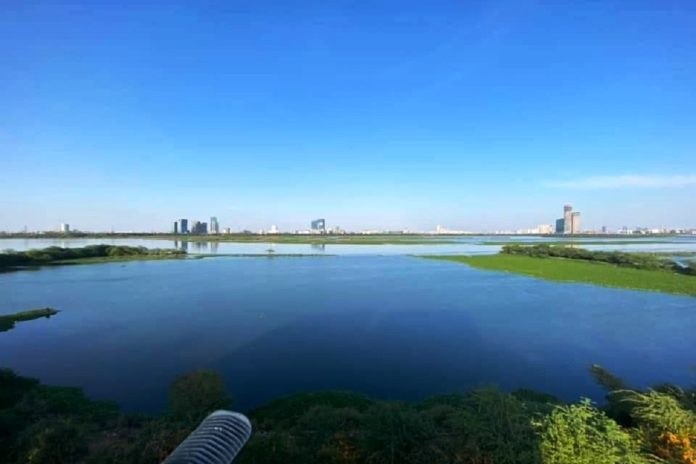
Blue skies are a luxury in India: It’s the same endless blue dome that stretches over America, Europe, and India alike. But it’s not blue anymore in most Indian cities. The saddest part? We got used to it.
Ram mandir needs trees and water bodies to be the model temple of the maryada purushothaman
I feel a tad bit sad every time I go outside the country. In Vietnam now. Lots of parks, used by the elderly for exercise and socializing. Lots of bicycles on the roads. We could have all this and more if only we could root out corruption and develop civic sense in India. https://t.co/Lb0rNBVSzfpic.twitter.com/ggQVOWAxYT
— Vishnu Sreekumar (@vishnusreekumar@masto.ai) (@vishnusreekr) October 24, 2025
Indus water treaty:
Denying Pakistanis even “a drop” of any of these waters is not a practical proposition in the here and now, and cannot be engineered out of thin air in the near or even mid-term. Constructing the dam infrastructure and system of subsidiary dams, etc on the eastern rivers to divert them fully to flow through India — assuming it is at all, practicable, will take India some two decades to realise. In all this time, the western river waters will be available to Pakistan.
Arm-twisting: US pressures India to give Amazon, Walmart full market access.
Setback for domestic chips: Adani pauses talks with Israel's Tower for $10 billion India chip foray. "Did not make strategic and commercial sense for the group".
Indian owned startup in Silicon Valley: These electric motors could help break the world’s dependence on China's rare-earths. Conifer technical lead Yateendra Deshpande spent years helping design some of the world’s most advanced electric motors, including the ones powering Lucid Motors luxury cars. He has worked at Apple on its ill-fated car project. His co-founder, Ankit Somani, worked on data-center designs at Oracle and Google.
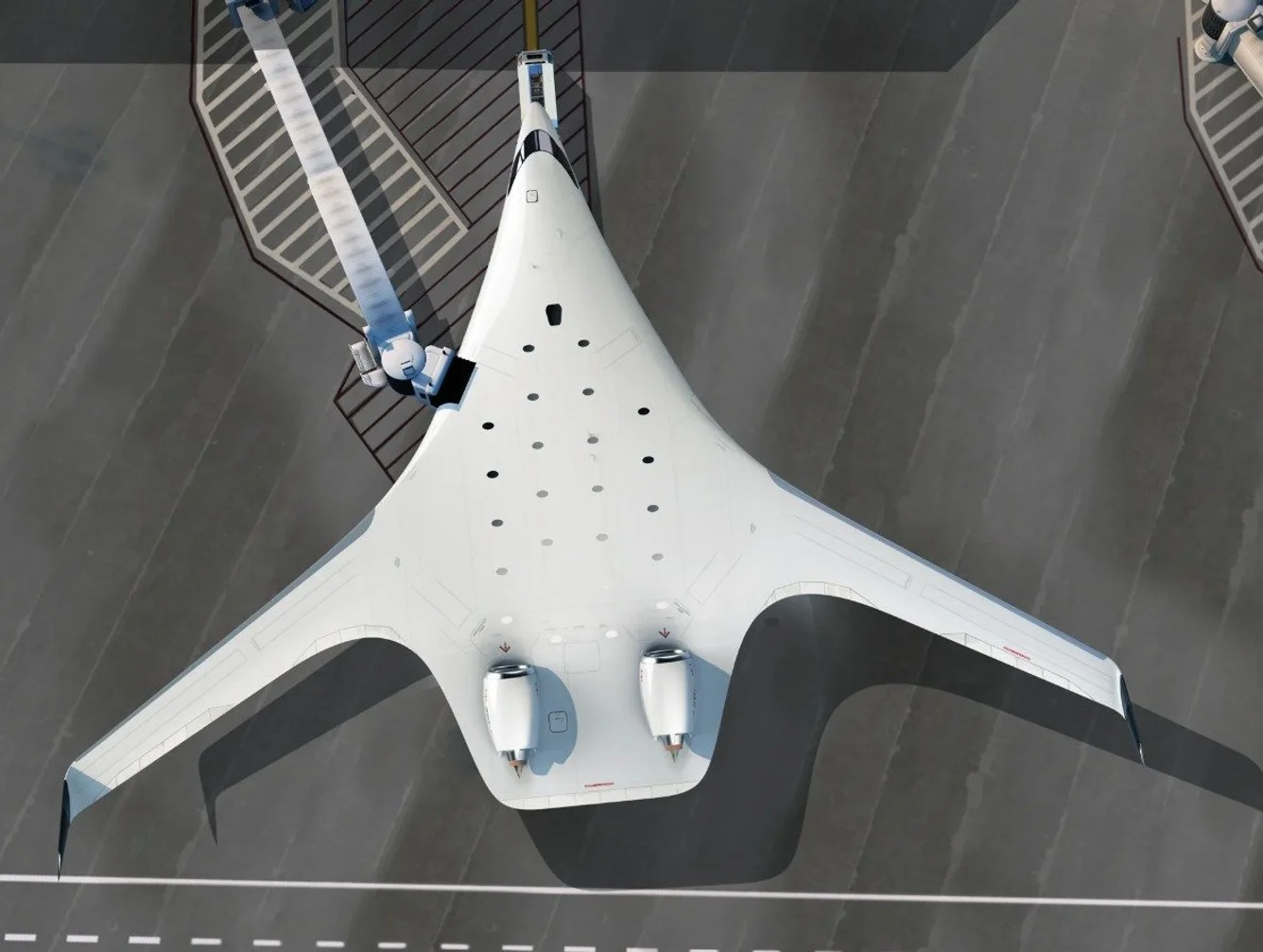
Blended wing aircraft: JetZero Secures $235M U.S. Air Force Contract As United Airlines Eyes 200 Orders For Revolutionary Blended-Wing Aircraft
Land-grab: 50 Christian farmers embroiled in land dispute join BJP hours after Waqf Bill passed. They have been protesting for several months for revenue rights over their properties, allegedly claimed by the Waqf Board.
30% less jobs: Microsoft's CEO reveals that AI writes up to 30% of its code — some projects may have all of its code written by AI
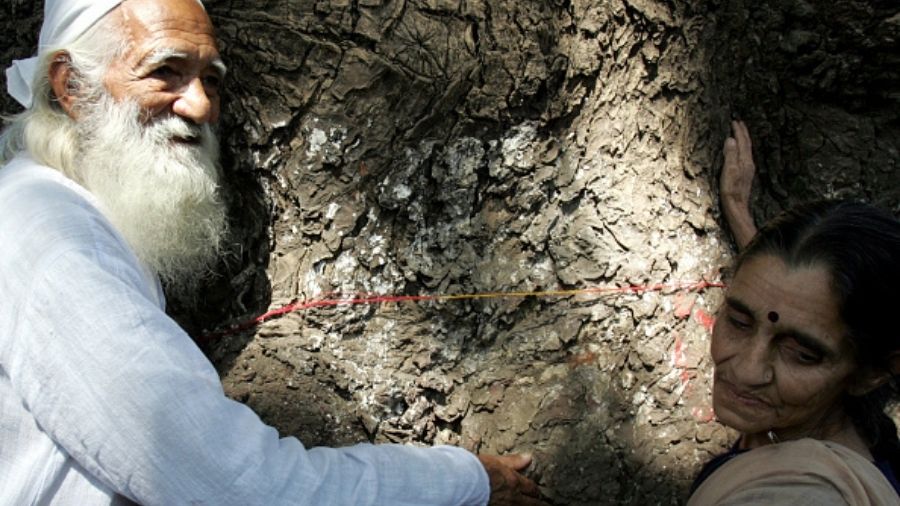
Sundarlal Bahuguna, Guard of Himalayas: “Himalaya is a land of penance. Nothing in the world can be achieved without penance. I am doing this on behalf of all who are striving to save our dying planet. Why should a river, a mountain and forest or the ocean be killed, while we cling to life?”.
As late as 2018, when Bahuguna was 91, he said in an interview that dams were paving the way for calamities and expressed concern that lakhs of trees will be cut down to make way for the Char Dham road and Pancheshwar dam. “The well-being of the Himalayas is important not just for Uttarakhand but the rest of the country as well”.
More of East India loot? India challenges $1.2 billion Cairn arbitration award, says 'never agreed to arbitrate'.. When an Air India aircraft lands at any US airport, Cairn would be able to move court and get that attached before it flies out.
Mango exports: US apples arrived in India without the Indian inspector being in the USA, but vice versa was not allowed. No Indian mangoes in US for second year in a row.
What are weeds? An empty field left undisturbed for long enough will inevitably turn into a forest, given enough time. Nature will fill empty, barren or disturbed ground with plants which quickly stabilise and build the soil, to prepare the ground for progressively larger plants, until the area is filled with trees, and many layers of understory plants beneath them. This process is called Forest Succession.
Why forests? Because forest systems are one of the most productive and most sustainable systems known, it is what Nature creates at almost every opportunity. Forest systems can be designed to produce food if we construct them using edible plant species, and they can produce other useful resources such as timber, fibres, dyes and medicines. In addition, what makes them special is that they are living ecosystems, and therefore support great biodiversity, they provide a home to a wide range of flora and fauna, which all comes together to create a balanced, natural, pest and weed free system.
When any soil is laid bare or disturbed, Nature has a system for repairing the degraded ground in order to prevent soil erosion and to reconstruct the ecosystem which was there or should be there. As the first line of action, Nature deploys pioneer plants, to stabilise the soil. These plants all have various unique attributes and aid the reconstruction process in various ways. Here are some examples:
- Plants with deep tap roots drill into hardpan to decompact it, creating channels to allow water and air back in the soil.
- Plants with fine, net-like root structures hold the soil together and prevent erosion on slopes and banks.
- Plants with thorns or which are poisonous protect the ground cover plants from being over-grazed by herbivores.
We are all familiar with these amazing pioneer plants, we commonly call them weeds! Weeds are by definition “plants growing where we don’t want them to” and that is not a biological or ecological categorisation, it’s just a unscientific value judgement of the worth and place of certain plants in the ecosystem according to subjective human opinion. The pioneer plant’s action of stabilising any soil disturbance or damage is only the first of many steps of a full-blown reconstruction process which Nature carries out.
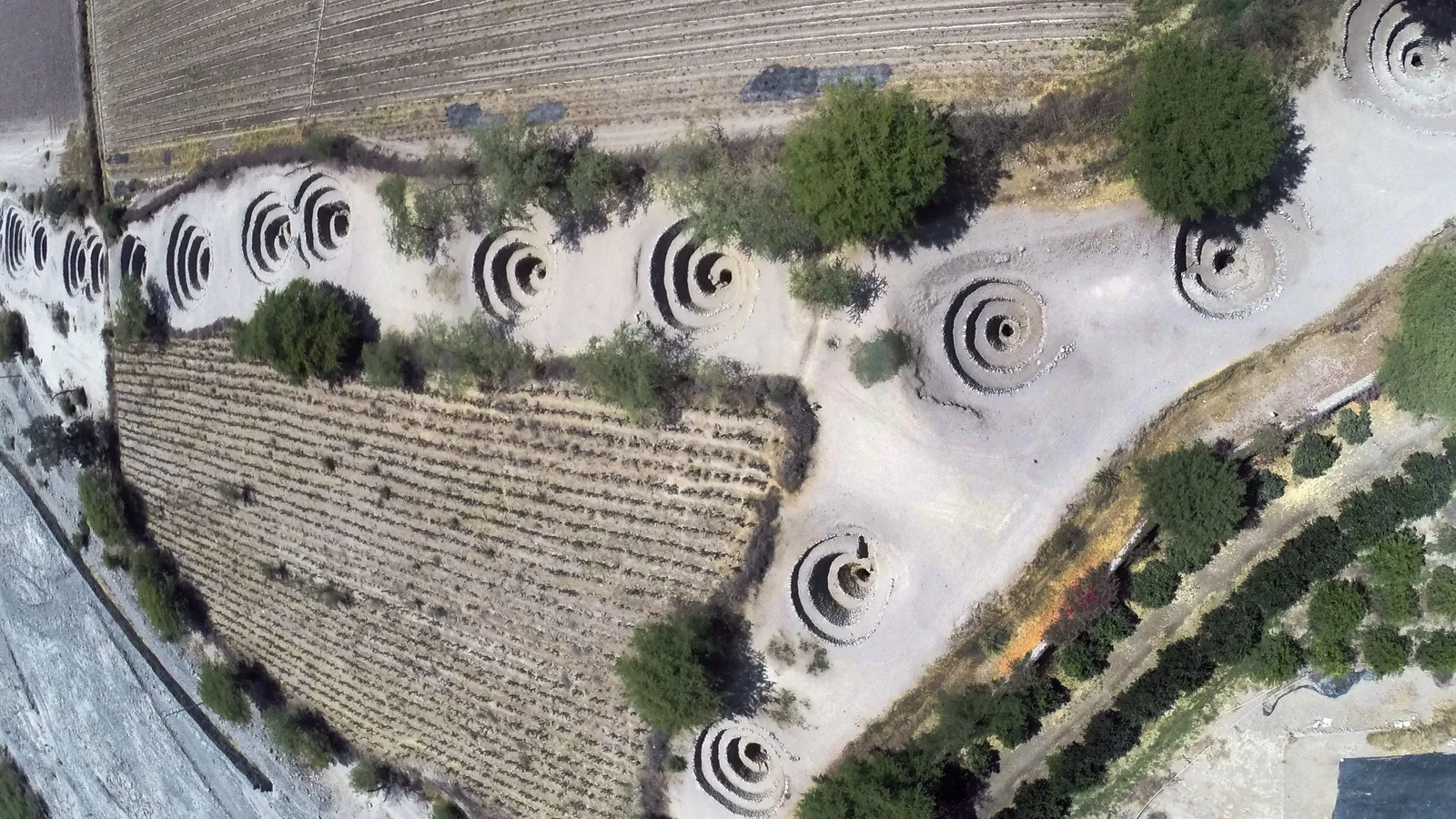
Planting the water: Peru is reviving a pre-Incan technology for water. It uses water canals called amunas – to divert wet-season flows from mountain streams and route them to natural infiltration basins. Because the water moves more slowly underground as it travels through gravel and soil, it emerges downslope from springs months later, when the comuneros collect it to water their crops. Because much of their irrigation soaks into the ground and eventually makes its way back to the rivers, repairing abandoned amunas scattered throughout the highlands could extend water into the dry season for city dwellers too.
Iran unveils its domestic supercomputer: Wholly designed and built by a team of Iranian engineers, it has a performance capacity of 0.56 petaflops at the moment and will reach one petaflops in two months.
2DG: “It is a glucose molecule analogue which can’t undergo further glycolysis. Monocytes/macrophages in Covid lungs (proliferative tissues: inflammation/tumour) become highly glycolytic after infection and facilitate SARS-CoV-2 replication which accumulates in virally infected cells and prevents virus growth by stopping viral synthesis and energy production.. Dr Jain showed that 2-DG can function as a differential radio-chemo-modifier, which can sensitize cancer cells while protecting normal cells. It enhances cellular damage and cell death by inhibiting repair and recovery.”
After Just 1 Hour of Administring Dose ...
Effect of '2-deoxy-D-glucose' of DRDO video of CHL Hospital, Indore.
Did China just wake us up to cyberwar? “Our defensive preparedness is almost non-existent. When Kudankulam happened, it was not the govt that went out to find who was behind it. It was a bunch of private hackers who did. Whatever capability exists in India is mostly outside the govt”.... As for offensive cyberwar capabilities, “If you can’t even defend your own networks and assets, what offensive capabilities are you likely to have”.
India still groping in the dark: At least one connection opened by Chinese state-sponsored hackers into the network system of an Indian port was still active. “There is a need to guard smaller companies that are part of the grid. Because if one is hacked, entire systems can be compromised.”
Chinese cyberattack on Microsoft morphs into global crisis: The Chinese initially targeted high value intelligence targets in the U.S, but it has changed since. “They went to town and started doing mass exploitation -- indiscriminate attacks compromising exchange servers, literally around the world, with no regard to purpose or size or industry.”
Chinese hackers targeted SolarWinds customers in parallel with Russian op.
Linear Generator: Mainspring Energy has been at work on a novel "linear generator" that it says can provide on-site electricity with lower emissions than fossil-fueled engines and microturbines, and greater flexibility than fuel cells. . . . . . . . Free-piston linear generator.
Recurring floods and landslides are an outcome of rampant destruction of nature in Kerala. Forests, hills and water bodies are being encroached upon and destroyed to set up homes, raise crops and build resorts, with the development here often being driven by greed, not need.
You can't build large dams in the Himalayas: In 2013, disaster struck the Mandakini river and this year it hit the Alaknanda. Bhagirathi was saved because three dam projects were scrapped after being half constructed.
When India was indeed a vishwaguru, it used science with common sense. We used to think of a development model which would not be disastrous for the people. The solution is what we did in Rajasthan. We made 11,800 small dams and not a single dam broke in the last 38 years. They are very small dams and they stopped water which then percolated
in the ground. The land absorbed them and it is now in an underground
aquifer.
India not ready for mass adoption of EVs: Because of EV adoption, Norway nearly leads the world in per-capita electricity use. . . . Hybrids are more suited for India for the near future.
Vacating the heights: Chinese troops were being posted to such forward locations for the first time and, contrary to belief that they were well-settled, the medical casualties were higher.
China’s “win-win.” It insisted on: 1. A Pangong-limited deal. 2. A Buffer Zone. The Fingers 4 to 8 area was disputed. But Buffer Zone includes a swath of Indian-held area never in dispute. India is retreating further back in its own territory, to its post between Fingers 2 and 3.
Life without Google and Facebook: Microsoft backs Australia’s proposal that tech companies pay newspapers for content. The proposal could prompt other countries to follow suit in a global transformation of the relationship between tech companies and traditional media.
Romania baptism manslaughter: A six-week-old had a cardiac arrest after he was immersed three times in holy water. He had a violent death and liquid was found in his lungs, an autopsy found.
Sitting on billions, Catholic dioceses amassed taxpayer aid: Scores of Catholic dioceses across the U.S. received aid through the Paycheck Protection Program while sitting on well over $10 billion in cash, short-term investments or other available funds
‘You are what you ate as a child’: Childhood diet has lifelong impact, says study. The quantity of good gut bacteria is significantly reduced in the Western diet group. This type of bacteria is involved in carbohydrate metabolism.
Bye-Bye vaccine? Israeli drug cured 29 of 30 moderate/serious COVID cases in days.. Helps prevent deadly cytokine storm
Vaccine worry: Oxford jab doesn't work against S Africa variant. . . . South Africa pauses AstraZeneca vaccine rollout
Mindful walking: “Walking meditation makes us whole again. Only when we are connected with our body are we truly alive. Healing is not possible without that connection. So walk and breathe in such a way that you can connect with your body deeply.”
Ancient Peruvian mystery: The puquios were part of a sophisticated hydraulic system used to retrieve and channel water. The uniquely shaped holes let wind into a series of underground canals, which forced water from underground aquifers into the areas where it was needed. The puquios were so well-constructed that 30 of them are still utilized by farmers to this day. The creation of such a sophisticated and enduring network is evidence of the architects’ advanced understanding of the region’s geology and annual variations in water supply.
How River Yamuna Cleaned Itself: Two months of the lockdown have done what successive governments could not do in 25 years with over Rs 5,000 crore at their disposal.
Punjab: Eco-friendly industries to be granted CTE/CTO within a day
Remote work: Will a cloud-based rural revival be jump-started by today's remote work surge? . . . . . Have we passed peak city?
1/ When what we produce in a village does not get much value in exchange, our income is low.
To raise income, we have to produce more valuable goods or services.
We could also have people with higher productivity and income move in locally and spend some extra income locally.
Sita Ram Goel on Mahatma Gandhi: What is relevant in Mahatma Gandhi is not his failure in solving the Muslim problem but his success in re-affirming the language of Sanatana Dharma which had been revived during the Swadeshi Movement.
The anti-Gandhi nationalists have never tried honestly to face the fact that it was he and not they who had stirred the minds and hearts of Hindu masses. It was he and not they who had mobilized Hindu society to make sacrifices in the service of the motherland. Nor have the denunciations of anti-Gandhi nationalists succeeded in doing the slightest damage to his stature.
In fact, his stature has risen higher with the passing of time. He continues to be cherished by Hindu masses as one of the greatest in their history. Reverence for him in the world at large has also continued to grow. He is now regarded as a profound thinker on problems created by an industrial civilisation and a hedonistic culture. Hinduism has gained abroad because Gandhi is known as a great Hindu.
Allowing import of chicken legs, milk, apple, almond and walnut from America will hit Indian agriculture already reeling under a terrible agrarian distress. These imports will decimate India's poultry industry, hit dairy sector n hill farmers. @PiyushGoyalhttps://t.co/557V1kjP4H
Dalit Karsevak's bitter reality check: In Bhanwar Meghwanshi’s village, low caste people joined the RSS in large numbers: “Of the fifty or so children who attended the shakha in my village, most were OBCs—Kumhar, Jat, Gurjar, Mali and so on. He was part of the first attempt at building the Ram temple, in the context of the Rath Yatra in October 1990. Then, he was “exhilarated”, chanting “To die for Ram-ji is such an honour…”. He and his Rajasthani comrades in arms were taught “how to evade the police” and were “told that implements to destroy the structure – hoes, spades, crowbars – would be provided by locals at Ayodhya”.
As the train started to slide out of the station, all the important functionaries slid out of the train.. I saw how one by one, the big folk, the industrialists, the sangh pracharaks, the leaders of VHP and BJP, all excused themselves. Having wished us well, they went back to their homes. Only people like me remained—impassioned Dalits, Adivasis, other young people from the lower castes, and a few sadhus and sants. To take charge of us, some lower-order functionaries tried to put us at ease, don’t worry, these people have other contingents to see off and then they’ll follow us directly to Ayodhya. They were never to come. They were sensible people and went back to their homes. I understood that sensible people always use us, we who are driven by passion; they push us into battle and return to their safe little coops.
However, Bhanwar Meghwanshi did not draw any conclusion from this episode but went to Ayodhya as a disciplined foot-soldier. But soon after, Bhanwar Meghwanshi fully realised the resilience of caste in the RSS on another occasion: while he had prepared food for Sangh parivar members who were touring his district, they refused to come to his home for eating; instead they took the food with them in order to save time and, they said, feed the village where they going next – but they threw it out on the road. Bhanwar Meghwanshi was shocked: How can the Sangh do this to me? They don’t believe in untouchability, in caste discrimination, they believe all Hindus to be one, they talk of a united Hindu society, and then this kind of hypocrisy?
Macaulay's children: Karnataka school to lose licence for levying fine from students speaking in Kannada
Cow poop to electricity:
World’s first commercial solution to generate electricity from dairy
waste. The CalBio-Bloom Energy system also removes methane that would
otherwise have been released into the atmosphere. Cow manure contains
approximately 65% methane, which has a 25 times greater impact on global
warming than CO2 emissions.
Bengaluru sitting on groundwater time bomb:
Groundwater supply in the IT city will decrease from 146 billion litres in 2018 to 36 billion litres in 2041 due to over-exploitation.
Why fasting bolsters brain power:
Fasting improves energy metabolism in neurons and stimulates the
production of 'Neurotrophic factors'. Improves the number of
mitochondria in your nerve cells. Ketones provide an alternative fuel
that boost the energy levels of neurons.
Cut the cutlery: Plastic with your home-delivered meal adds up to 22,000 tonnes waste every month. . . . . . . Where plastic outnumbers fish by seven to one
MNC overlords: 60 of America's biggest companies paid no federal income tax in 2018. Amazon didn't pay a cent in federal income tax on $11.2 billion in profits in 2018. In fact, Amazon claimed a federal income tax rebate of $129 million.
China's J-20 Stealth Fighter Has F-35 'DNA': Beijing has heavily invested in industrial and military espionage. In 2007, Chinese hackers stole technical documents related to the development of the F-35. The details on the hack, eventually revealed in documents leaked by Edward Snowden, are just one example of Chinese attempts to steal foreign aviation technology; as recently as 2017, Chinese hackers went after Australian F-35 defense contractors, nabbing even more info on the cutting-edge fighter.
The worse he behaves, the greater his weight in Europe: Erdogan has been expanding Turkey beyond its borders – starting
with Cyprus, the Greek Islands, Suakin Island (Sudan) and Syria. In Germany, Turkey controls 900 mosques out of a total of 2,400. Speaking with Turks in Germany, Erdogan urged the Turkish diaspora not to assimilate, and called the assimilation of migrants in Europe "a crime against humanity." He has spies throughout Europe through a network of mosques, associations and cultural centers.
Amazon's quest to rule India: Amazon in talks to buy stake in India's Reliance Retail. . . . . We love our East India overlords
Lockheed may fly with Bengaluru startup's nanotech: “Modern fighter aircraft, including Tejas, are created from composites which cannot conduct electricity. Lightning strikes can destroy the aircraft. Aircraft are equipped with a wire mesh to channel the lightning strike to ground but it adds to the weight of the aircraft. Nanotubes served the same purpose but at a significant weight reduction”.
Sino-imperialism: Why China Is Taking over Africa's Resources One Country at a Time. . . . Six million rosewood trees have been cut down in Ghana for illegal export to China. Investigations found massive institutionalised timber trafficking scheme, enabled by high-level corruption and collusion.
Sign of the times: China's capital orders Arabic, Muslim symbols taken down. . . . . How do the Chinese make a profit on eBay selling items for 99p with free postage?
We are effectively moving towards a situation where one community will enjoy complete monopoly over the whole meat industry worth billions of dollars based on religious identity.https://t.co/h3NF1neQd3
o Jayanthi Natarajan loses job: "After my removal as Minister, there was widespread coverage in the Kerala media that my removal was because I had notified the order on protection of the Western Ghats, the Kasturirangan report, on Dec 19, 2013, (just one day before my removal). My successor Shri Moily, put my orders on hold".
o Cut the dam(n) height: Had TN started releasing water from the dam into Kerala when it had reached the critical level of 139 feet, the crisis could have been averted to some extent. “The 3 feet make a lot of difference. They contain 792 million cubic feet of water, which when released translates into a flow of about 9,000 cusecs, which got added to the flow caused by the rain”.
o Second tunnel in Mullaperiyar dam? The maximum drawal from the dam through the tunnel is 2,300 cusecs. If this quantum is further increased with an additional tunnel, TN can evacuate more water during monsoons.
This is how India completes the unfinished colonisation mission the British left incomplete in 1947. This is what causes floods and droughts. This is what aggravates climate change. This is how contractors get rich and ordinary people get impoverished. https://t.co/LU4TTZp8IM
NYU Makes Tuition Free for All Medical Students: School officials worry that rising tuition and soaring loan balances are pushing new doctors into high-paying fields and contributing to a shortage of researchers and primary care physicians.
Belt and Road and Chinese imperialism: Instead of paying loans back gradually, Tajikistan is signing away land and mining rights. In 2011, Tajikistani ceded 1,100 square kilometers of land near the Afghan border to China. Not only was the land along the Wakhan Corridor— historically one of the most strategic junctions for Chinese access to the Indian Ocean and West Asia—it also purportedly contained gold and uranium deposits.
That same year, Tajikistan allowed Chinese farmers to till 2,000 hectares of arable land—a scarce commodity in such a mountainous country—near the Uyghur Autonomous Region of western China. It is widely believed , albeit unofficially, that these deals were made in exchange for “hundreds of millions of dollars” in debt relief .
FGFA co-development: Is India about to give up on building stealth fighters with Russia? Indian Air Force believes the plane’s stealth and cross-section features are inferior to America’s F-35. Another concern is that the FGFA does not have modular engine concept, making maintenance and serviceability of the fleet expensive and troublesome.
“Disastrous for India and Bangladesh”: China to build a 1,000-kilometre tunnel to carry water from Tibet to Xinjiang. The project would divert water from the Yarlung Tsangpo River in southern Tibet, which turns into the Brahmaputra once it enters India, to the Taklamakan desert in Xinjiang.
India is one of the least wasteful economies: Sustainability has always been a core component of Indian culture. Humans and nature share a harmonious relationship, which goes as far as a reverence for various flora and fauna. Rural communities live close to nature and continue to live a simple and frugal lifestyle .
Explained: Why Chennai is under water: What may have been a tank, lake, canal or river 20 years ago, is today the site of multistorey residential and industrial structures. There are over 1.5 lakh illegal structures in the city.
Sunita Narain: Planners see only land, not water and greedy builders take over. Wetlands are rarely recorded under municipal land laws, so nobody knows about them.
We don't want you: Europe to Return Thousands of Pakis. "Pakistanis will not qualify as political refugees as their country is under a democratic process".
Modi’s Pride: The True Spirit of India: Imran Khan.
Maria Wirth: Why I am grateful to India: In school I had learnt that Hinduism was about an unjust caste system and plenty of (false, since Christianity has the true one) gods, and not knowing better, I had believed it. However, during this stopover, I stumbled on India’s ancient tradition and was amazed at its depth. I appreciated that intelligence was used in trying to establish the truth about this universe and no unverifiable dogmas were imposed. Swami Vivekananda’s Jnana Yoga was the first book I read. He stands in a long line of rishis who have dedicated themselves since time immemorial to an intensive, disciplined, inner search for what is essentially true. Their findings don’t contradict modern science:
The basis of every appearance in this universe, including our own person, is the same one Essence or Presence – real, infinite, eternal, formless and nameless. All forms and names are like waves on the ocean. The waves may think that they are separate from the ocean. They may not even see the ocean but only other waves. They may cling to their (temporary) form and be terrified to lose it, but ultimately all waves are nothing but the ocean and nothing is lost when their form subsides. Similarly, though we may consider ourselves as separate from the whole and cling to our impermanent person, our essence is pure, limitless awareness and nothing of substance is lost when form and name are lost. The purpose of life and its fulfilment is to discover who we really are, the rishis declared.
This knowledge made immediate sense to me and became a source for great joy. It was in tune with my vague intuition that, if there was a God, he must be the basis of everything, and not a separate entity.
Early during my stay in India, I met Devaraha Baba and Anandamayi Ma, two renowned saints of that time. I had never met persons like them. There seemed to be nobody there behind their eyes, and their presence felt beneficial. “It is because they are enlightened,” someone explained to me. “God shines clearly through their form, because there is no ego to block that.”
Fishermen discover river in Bay of Bengal: The over 100 km-wide freshwater mass that is formed from river discharges and runoffs is transported down south by the East Indian Coastal Current.
Massive savings: Centre to start direct kerosene subsidy transfer this fiscal. Govt has saved Rs 10,000 cr or $1.56 bn subsidy outgo on cooking gas through a similar scheme
Pollution is inevitable: In 2000 diesel cars were only four per cent of the total sales. This increased to 50 per cent by mid-2000. Each diesel car is legally allowed to emit four-seven times more than the petrol variant.
Solar train? The Integral Coach Factory, in collaboration with IISc, Bengaluru, will begin testing a solar-powered train project. ...Hybrid? fine. But purely solar? ..don't know about that.
Make the Polluters Pay Us: Instead of investing in dirty fuels, let's start charging polluters for poisoning our skies - and then invest the revenue so that it benefits everyone.
Bobby Jindal’s ‘Embarrassing’ Budget Tricks: “His ineptitude with budgets alone should disqualify him from
supervising a small-town Dairy Queen, much less managing the U.S.
government's executive branch.”
PETA supports Shivraj Singh Chouhan: "Thanks to the Madhya Pradesh CM, anganwadi meals will continue to be served in the state without cruel and cholesterol-laden eggs-- a compassionate and healthy choice that has earned the CM a 'Pragatisheel Award' from PETA India."
‘Moron’ terrorist takes a selfie in front of ISIS headquarters, Air Force bombs it 22 hours later. U.S. Intelligence, which heavily monitors social media accounts from ISIS members and supporters, managed to pinpoint an ISIS headquarters building in Syria by using the selfie photo as a reference point.
Plight of Kerala Rivers: Brazen sand mining have sounded death knell for the Pampa river. “The river's natural river linking canals like Varattar (between Pampa and Manimala river) and Uthrappalli (between Pampa and Achankovil river) have already faded into history,”
RSS Body Bats for Smart Cities with 'Bharat' Touch: “Building just a society signifies something more than mere
administration of laws. It means every individual; group of community
must get a fair treatment and a just share of the fruits of
development.”
Where is the Freedom of expression now? Tamil writer facing legal trouble over alleged poor depiction of Christianity, priests and nuns. "I am being osctracized for supporting Modi".
What’s Left, Comrade Yechury? Yechury wrote a glowing piece about Nicolae Ceausescu in 1989, following a visit to Romania where he had met the tyrant who used toilets made of gold. A few weeks later, Ceausescu was ousted in a democratic uprising. The CPM leader also embarrassed himself when he appeared on Doordarshan to welcome the aborted coup of Gennady Yanayev against Mikhail Gorbachev.
Heinous crimes: Cabinet clears proposal to try juveniles accused of heinous crimes under laws for adults
Himalayan Seismic Risk: Although a major plate boundary with a history of large-to-great sized
earthquakes, large earthquakes on the Himalayan thrust are rare in the
documented historical era. Just four events of M6 or larger have
occurred within 250 km of the latest earthquake over the past
century.
Restoring the Los Angeles River: What Los Angeles is building is more like a monument to rivers—artificial, in perfect LA style, but constructed on ecological principles. A once-hostile environment will be terraformed into a hub of human activity. “This is the beginning of a golden time for the LA River”.
Chances of Another Chernobyl Before 2050? 50%, Say Safety Specialists And there’s a 50:50 chance of a Three Mile Island-scale disaster in the next 10 years, according to the largest statistical analysis of nuclear accidents ever undertaken.
India to invest $10 billion in chip manufacturing facilities. "India would also be investing $400 million in developing an Indian version of micro-processor."
'Water man of India': Rajendra Singh uses a modern version of the ancient Indian technique of rainwater harvesting. The judges of the Stockholm Water Prize say his technique is cheap, simple, and that his ideas should be followed worldwide.
Fighting pollution: Only one half of the motorists in Paris will be allowed to drive on any given day based on license plate number.
Cleaner diesel: Propel launches high performance renewable diesel.
GDP mirage: China to focus less on GDP, more on sustainable, higher-quality expansion.
Sunita Narain: Real pride of ancient Indian science: Till the time the British came to India, the water traditions were in
vogue. British gazettes speak of these systems, at times with awe,
calling us a hydraulic society. Sir William Willcocks, a British
irrigation engineer, who was called in 1920 to advise the administration
on how to handle famines, said the best answer was to go back to the
ingenious system of flood management of Bengal. This was never done, of
course.
Ancient Indians also understood the art of water governance. Kautilya's Arthasastra,
written around 300 BC, has details of how tanks and canals are to be
built and managed. The key was to clarify the enabling role of the state
- the king - and the management role of local communities. The kings
did not have armies of public works engineers; they provided fiscal
incentives to communities and individuals who built water systems.
The British changed all this, by vesting the resource with the state and
creating large bureaucracies for management.The British rulers also changed the tax system; collection of revenue
became paramount, even during droughts. There was little then to invest
in community assets. The decline came quickly and was cemented by
polices of independent India.